Mechanically Simple
A cradle between four pilings: stable, mechanically simple, serviceable, and available across every capacity a residential slip needs.
The most common lift on South Florida water — a cradle between four pilings, sized to your boat's real wet weight, driven and wired by one team.
Where the canal allows pilings, this is the answer
Stable, mechanically simple, serviceable, and available across every capacity a residential slip needs.
Boarding is easy — lower the boat level with the dock and step across — and storm practice is well established: raise to the top of travel and strap down. For heavy vessels, the same logic scales: eight-post and platform configurations carry capacities up to 120,000 lb. If your boat is the big one on the canal, the lift exists — it's the pilings and engineering that have to be done right.
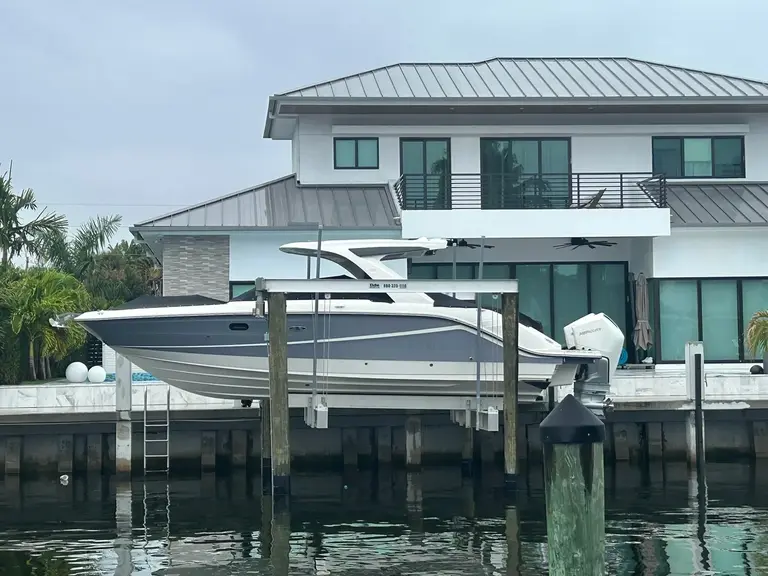
A cradle between four pilings: stable, mechanically simple, serviceable, and available across every capacity a residential slip needs.
Lower the boat level with the dock and step across — boarding is straightforward, and storm practice is well established.
For heavy vessels the same logic scales: eight-post and platform configurations carry capacities up to 120,000 lb.
We size to wet weight — dry weight plus engines, fuel at about six pounds per gallon, water, and gear. The quote shows the math.
We fit the bunks to your hull, not a generic V, so the boat sits right and the load is carried where it should be.
Pilings driven and the lift wired by one team — through our sister company's electrical license, on one schedule.
A lift fails to satisfy in one of two ways: undersized so it strains, or mis-bunked so the hull sits wrong. We size to wet weight — dry weight plus engines, fuel at about six pounds per gallon, water, and gear — then fit the bunks to your hull, not a generic V. The quote shows the math. On a tight canal instead? See the elevator lift. Want a clean dock line? See the No Profile lift. Or start at the boat lifts hub.