New Concrete Seawall Construction
Engineered reinforced concrete seawall systems with epoxy-coated rebar, designed for commercial, high-exposure, or heavy-load waterfront applications.
Reinforced concrete seawall systems engineered for high-exposure and commercial waterfront properties, built with epoxy-coated rebar to resist South Florida's saltwater environment.
Engineered Concrete Built to Last
Concrete seawalls remain the preferred choice for commercial properties, high-exposure shorelines, and sites where maximum structural mass is required.
We build and repair reinforced concrete seawalls using epoxy-coated rebar, marine-grade concrete mixes, and designs worked out for your site's conditions. We also repair existing concrete seawalls, from crack injection and spall remediation to full cap replacement and tie-back reinforcement, using proper structural methods rather than cosmetic patches that fail within a few seasons.
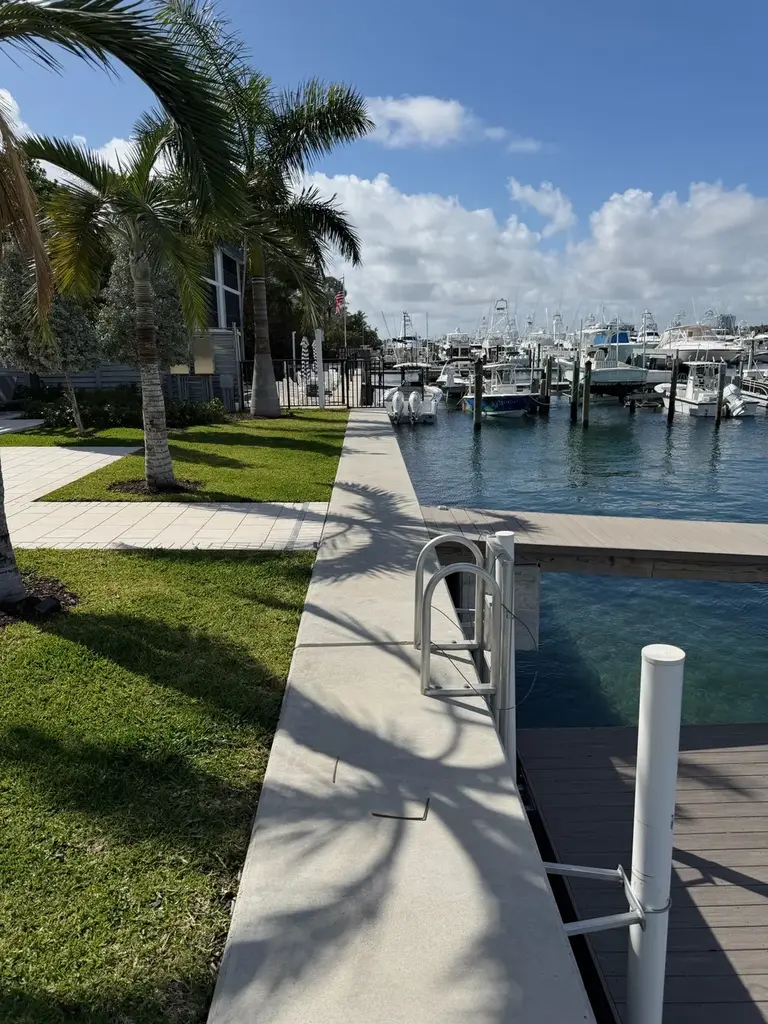
Engineered reinforced concrete seawall systems with epoxy-coated rebar, designed for commercial, high-exposure, or heavy-load waterfront applications.
Structural crack injection, spall repair, and panel restoration to extend the life of existing concrete seawalls and restore watertight integrity.
Reinforced concrete cap removal and replacement with properly elevated, rebar-reinforced pours that meet current NAVD88 code requirements.
Exposure of corroded rebar, application of corrosion inhibitors, and concrete patching to halt the expansion damage that causes seawall spalling.
Addition of galvanized or stainless steel tie-back and deadman anchor systems to stabilize bowing or leaning concrete seawall sections.
Polyurethane injection that fills voids and cavities behind concrete seawalls and stops the soil migration that precedes catastrophic wall failure.
Concrete seawall damage is often visible on the surface but structural failure is occurring from within. These signs indicate your concrete seawall needs professional attention.
Inspect
We assess your concrete seawall's condition including crack mapping, deflection measurement, rebar corrosion evaluation, and soil void detection.
Design
We engineer the repair or replacement solution specifying concrete mix, rebar grade and coating, tie-back requirements, and NAVD88 cap elevation.
Permit
We manage all required permits from city, county, and DEP agencies, including structural drawings from our engineering team.
Build
Our licensed crew performs the work using marine-grade concrete, epoxy-coated rebar, and proven construction methods appropriate for South Florida's environment.
Handover
Final inspection, as-built documentation, warranty package, and maintenance guidance to maximize the life of your concrete seawall.
Concrete itself is not the only material to watch in a seawall. Chlorides carried by saltwater can move through cracks and pores toward the reinforcing steel. Once the steel corrodes, it expands, which can crack the surrounding concrete and push pieces away from the face. That process is called spalling. It often starts where exposure, poor drainage, thin cover, or repeated wet-dry cycling give water an easy path in, then becomes visible as rust staining, hollow areas, cracks, or loose concrete.
A modern concrete seawall design addresses the exposure before the pour. Mix selection, reinforcement detailing, adequate cover over the rebar, crack control, drainage, and a cap designed for the waterline all work together. Epoxy-coated rebar can add another layer of protection where the specification calls for it, but no coating replaces correct placement and consolidation. We also account for the existing wall, tie-backs, elevation, and access so the repair or replacement solves the structural problem rather than covering the symptom. Compare it with a vinyl seawall or Truline hybrid wall before choosing the material.