Survey at Mean Low Water
We survey your depths at mean low water — the honest number, not the high-tide one — before any math or money.
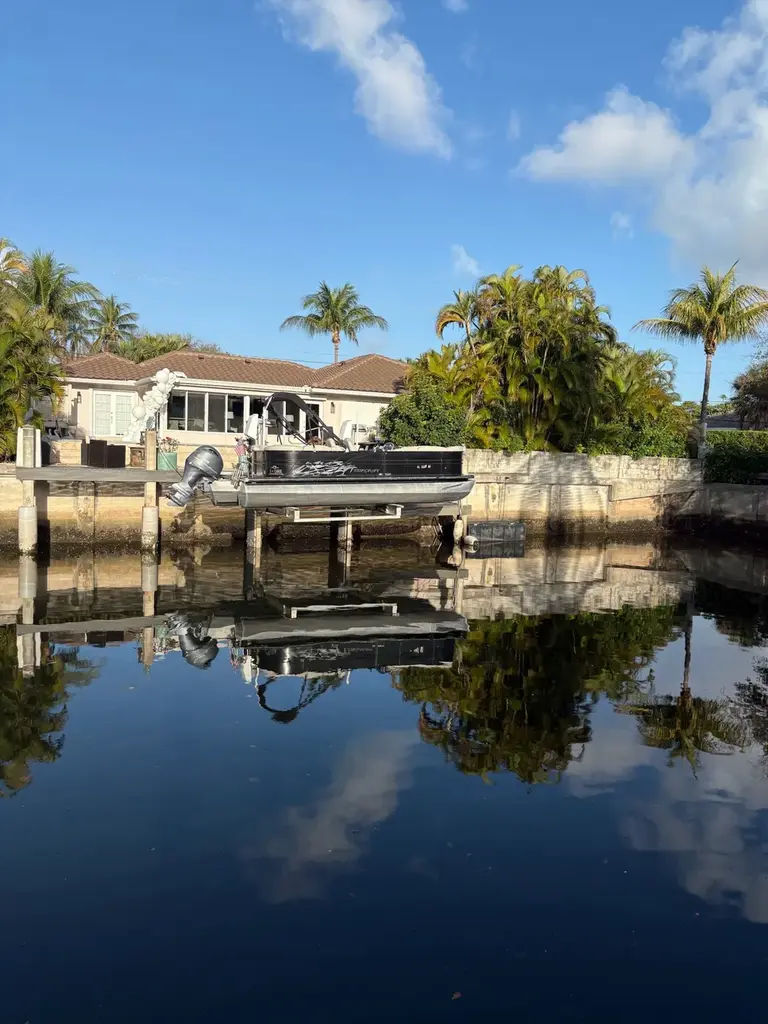
If your boat touches bottom at low tide — or the new boat draws more than the old slip allows — the fix is measured in cubic yards. We dredge behind homes across Broward and Palm Beach County.
The math is simple once the survey is honest
First we survey your depths at mean low water — the honest number, not the high-tide one.
The math from there is simple: area to be dredged, times the cut depth needed, divided by 27, equals cubic yards. Cubic yards — plus what happens to them — drive the price. Spoil disposal is the fork in the road. Material dewatered and placed on your own property is the economical route when the site allows it; barging or trucking material away costs meaningfully more. We price both where both are options, so the trade-off is yours to make with real numbers.
We survey your depths at mean low water — the honest number, not the high-tide one — before any math or money.
Area to be dredged, times the cut depth needed, divided by 27, equals cubic yards. Cubic yards drive the price.
On-site dewatering is economical when the site allows it; barging or trucking away costs more. We price both where both are options.
Generally back to previously permitted or documented historic depths — dredging is usually maintenance of what existed, not new excavation.
FDEP and county review, with the U.S. Army Corps involved depending on the waterway. We file, track, and tell you the realistic window.
For larger projects, our dredging division, Palm Beach Dredging, runs the heavy equipment side of the house.
Residential maintenance dredging — restoring previously permitted or historic depths — moves through FDEP and county review, with the U.S. Army Corps involved depending on the waterway. Maintenance work back to documented depths is a far simpler path than new deepening, and the permit phase is usually the longest part of the schedule. We file, track, and tell you the realistic window before you commit. While the slip is open, it's also the right moment to look at your dock, pilings, and boat lift.
Start with what the boat is telling you. Prop wash that clouds the slip or piles material behind the lift can point to shoaling near the propeller. Grounding at low tide, a prop that cannot clear the bottom, or a new boat that draws more than the old one are all reasons to measure the depth instead of guessing. A boat lift that cannot lower far enough to load the boat may have an equipment issue, but it may also be running out of water below the cradle.
We survey at mean low water because high tide hides the problem. The survey shows where the bottom has risen, how much area needs work, and whether the target is previously permitted or documented historic depth. That distinction matters: restoring a maintenance depth is a different conversation from asking an agency to approve new deepening. If the dock or lift also needs attention, review the boat lift installation requirements before setting a final depth.
A barge gives the excavator a stable platform on the water and lets the work reach a residential slip without driving heavy equipment across the property. We plan the access, staging, and protection of the adjacent dock and seawall as part of the scope.
The excavator removes the measured material to the permitted maintenance depth. We keep the cut tied to the survey and the approved plan rather than treating the bottom as an open-ended excavation.
Material can be dewatered on the property where the site and rules allow, or loaded and hauled to an approved location. Cubic yards and disposal route are priced separately so the estimate shows the real choice.
Dredging is a waterway project, so the permit path depends on the location and the requested work. The Florida Department of Environmental Protection and county review may apply, and the U.S. Army Corps of Engineers can be involved depending on the waterway. The agencies need a clear description of the existing depth, proposed maintenance depth, area, material, access, and disposal plan.
The permit phase often controls the schedule more than the excavation itself. We use the survey and available permit history to define the maintenance scope, file the project through the applicable review, and explain what is known before you schedule around a boat delivery or lift installation. While planning the work, it is also worth checking the dock condition and pilings that the barge will work beside.