We just wrapped a seawall maintenance job in Boca Raton using NCFI polyurethane injection — the kind of quiet, surgical fix canal homeowners actually want when the yard is settling but the wall isn't ready for a full tear-out.
No excavator chewing up the pool deck. No ripped-out landscaping. Probes in the grass, resin behind the wall, and the crew packed up the same day. The right repair starts by identifying whether the wall itself is failing or whether water has created a void behind a still-serviceable structure. That is why an inspection comes before we recommend injection, a broader seawall repair, or a new wall.
What was going wrong (and why injection fits)
On Boca and Palm Beach canal lots, the story is often the same: water and tidal movement pull fines out through joints and weep points. You get soft spots a few feet landward of the cap, pavers that won't stay level, or a lawn that keeps “eating” fill. The face of the wall can still look fine while the void behind the wall grows.
That's when we look at polyurethane injection before jumping straight to full replacement — especially when the structure is still sound and the problem is lost backfill or voids. A targeted repair can reach the space that is actually moving without automatically disturbing every finished surface between the house and the canal. We document the wall, cap, tie-backs, drainage, and soil symptoms so the recommendation matches the failure instead of just covering the visible depression.
Injection is not a shortcut around a failing seawall. If the wall is rotating, its wales are no longer doing their job, or the structure needs a replacement-level scope, we move the conversation toward new seawall construction rather than selling a small treatment for a large structural problem.
Why we use (and recommend) NCFI
We like NCFI for this work for practical job-site reasons, not brochure reasons:
- It expands where the soil isn't. The two-part resin goes in as a liquid through injection probes, then expands to fill voids and densify weak zones behind the seawall — exactly where fill has been migrating toward the canal.
- Minimal disruption to a finished Boca backyard. Screens, pool cages, river rock, and manicured lawns stay put. We're working through small probe points in the turf, not opening a trench from the lanai to the water.
- Fast return to normal use. Once the material sets, you're not waiting weeks for a rebuild schedule. Homeowners get stabilization without living in a construction zone.
- Targeted maintenance, not a default rebuild. Full seawall replacement is still the right call when the wall is failing structurally or you're past Broward or Palm Beach County “substantial repair” thresholds. NCFI shines when the job is maintenance: stop the voids, firm the soils, and protect the yard and cap while the wall still has life.
- Clean jobsite habits matter. We stage pumps, hoses, and material on tarps, control the injection, and keep the dock and landscaping usable. That's how you do high-end Boca waterfront work without making the property look like a yard.
What this Boca job looked like
Our South Florida Seawall crew set up on the lawn next to the concrete seawall cap and composite dock — injection pump, NCFI material, probes, and hoses. Techs drove the probes to depth, injected in controlled passes, and worked the line along the wall where the settlement showed. The finished property still had its pool screen, landscaping, and dock; the intervention stayed focused on the soil behind the wall.
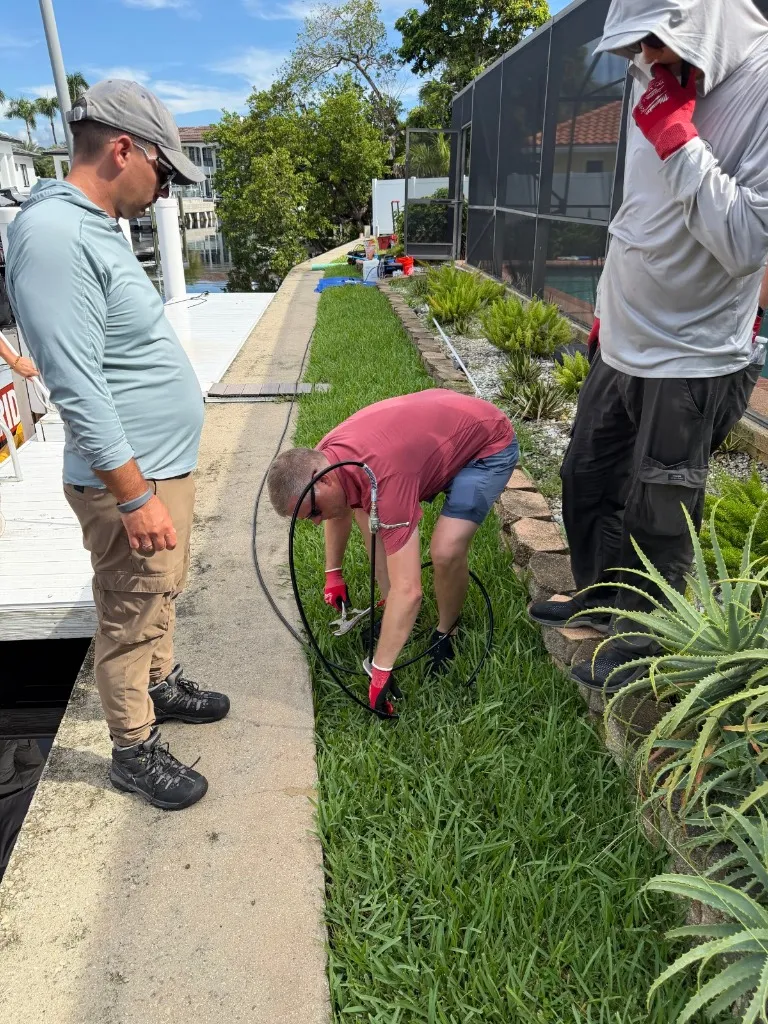
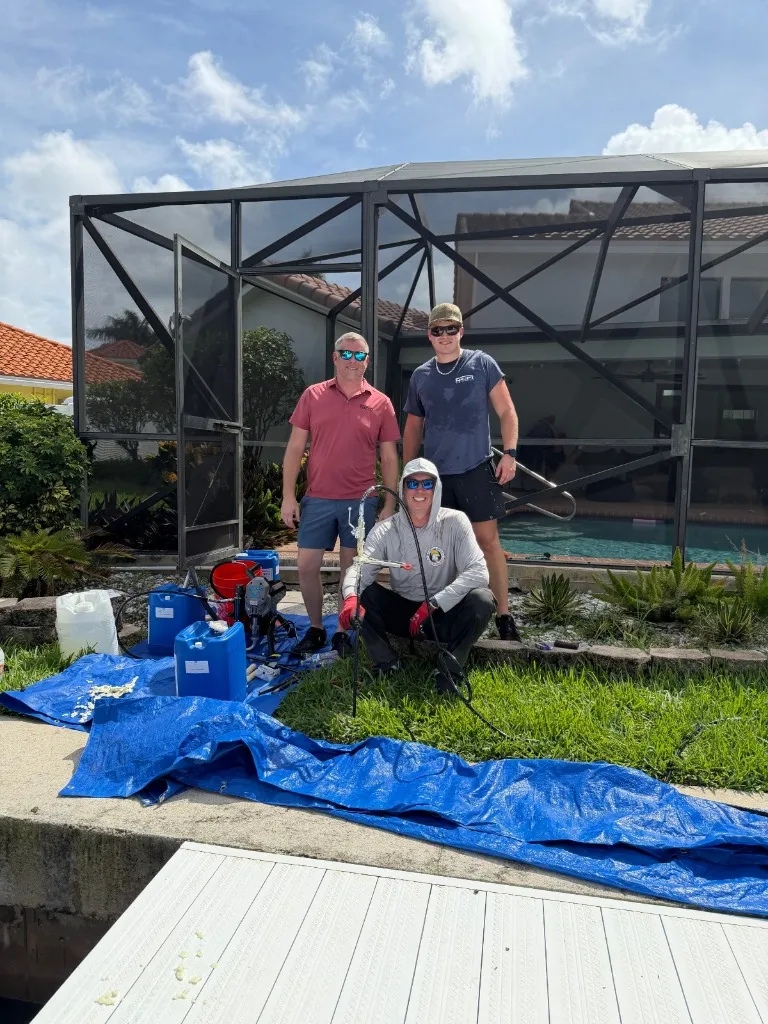
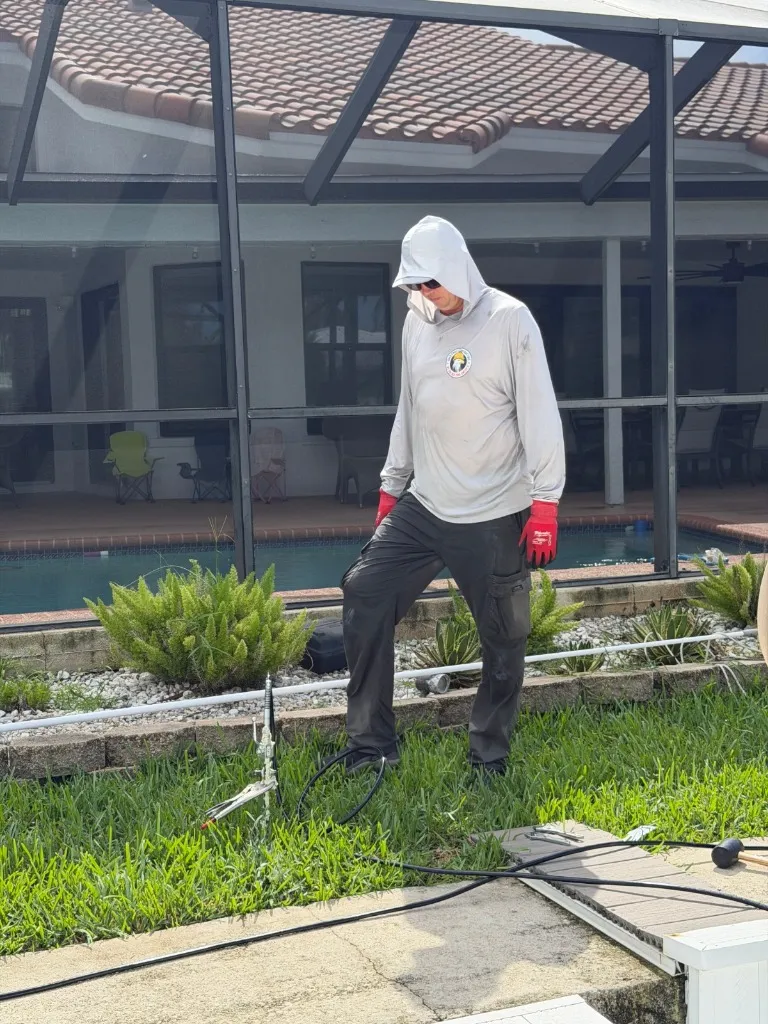
This is the kind of maintenance work that rewards careful diagnosis. The equipment is visible while we are there, but the finished result should be quiet: no long excavation, no unnecessary removal of the pool deck, and no new construction footprint beyond the probe points and the access needed to do the job.
Is NCFI right for your seawall?
Good candidates usually look like:
- Soft or settling soil a few feet behind the seawall.
- Recurring sinkholes or voids you've been filling with dirt.
- A wall that still looks structurally okay but is leaking fill.
- A finished Boca or Palm Beach yard where excavation would destroy hardscape.
Not every wall is an injection job. If panels are rotating, wales are shot, or you're already in full-replacement territory under local resiliency rules, we'll say so. We're not going to sell foam when you need a rebuild. For concrete walls with broader deterioration, compare the repair path with our concrete seawall information and the factors in our seawall cost guide.
The same decision applies across the Palm Beach waterfront. A canal wall in Boca Raton may have different access and finished-surface constraints than a nearby Delray Beach property, but the first question is always the same: is the wall sound enough for targeted stabilization?
Canal home in Boca? Send photos.
If you're seeing settlement behind a Boca Raton, Highland Beach, or Delray canal wall, send a few pictures of the soft spots and the cap. Reach us through our contact page and we'll tell you straight whether NCFI polyurethane injection, a repair, or a full seawall makes sense. The goal is not to choose the most disruptive option; it is to match the work to what is actually failing.