
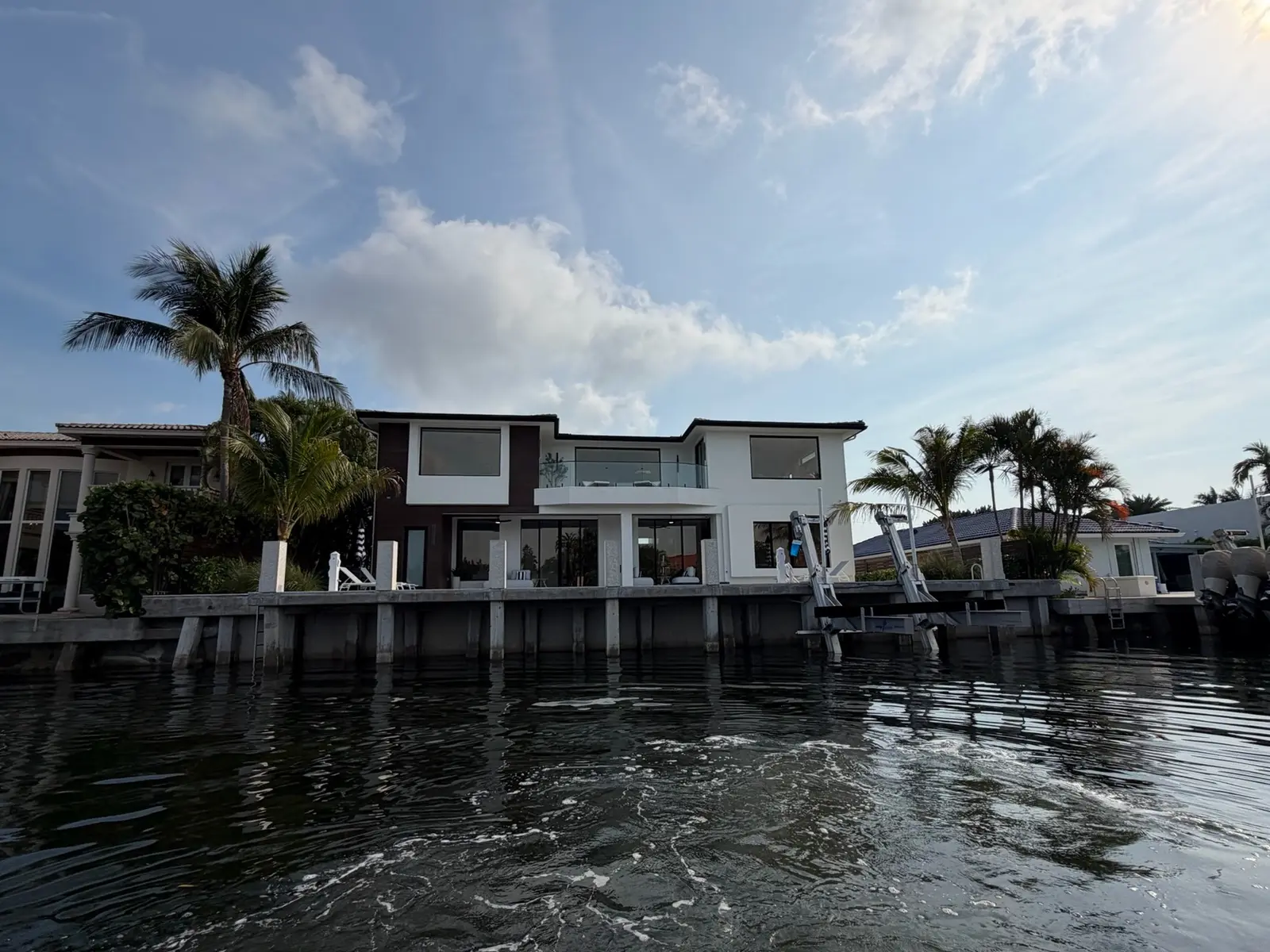
How long does a seawall last? The honest answer is that it depends on the material, how it was built, and how it’s maintained. There is no single expiration date that applies to every waterfront property in South Florida.
A seawall is a system, not just a row of panels. The panels hold back soil; a reinforced concrete cap ties their tops together; tie-back rods connect the cap to buried anchors called deadmen; and weep holes and any French drain let water escape. The weakest component often sets the wall’s practical life, not the panels. A sound wall face can still be at risk if its rods corrode, its toe loses support, or pressure builds behind it.
Seawall lifespan by material
Material matters, but so do soil, water exposure, design, installation quality, and the condition of the connections and drainage. The figures below are not a warranty or a promise for an individual property. They are the ranges we can support from our own South Florida field experience for two common systems.
- Reinforced concrete. Our field experience is that a properly constructed reinforced concrete seawall in South Florida typically lasts 25 to 40 years before requiring significant structural attention. The main failure path is salt water reaching the rebar, which corrodes and expands, cracking and spalling the surrounding concrete. Epoxy-coated or stainless rebar and prompt repairs to cracks help extend service life. See our concrete seawall information for the conditions behind that range.
- Vinyl. Properly installed vinyl seawalls in South Florida routinely last 50 to 75 years with minimal maintenance, based on our field experience. Vinyl has no steel core to corrode and is immune to marine borers, but it still depends on adequate embedment, a stable toe, a sound cap, tiebacks, and working drainage. Our vinyl seawall page explains the system.
- Wood. We do not assign wood a year range. The American Wood Protection Association’s Use Category system places wood in salt or brackish water in its UC5 marine categories; UC5C covers southern waters where the most aggressive marine borers attack. That makes species and the correct treatment level critical, and wood is generally the shortest-lived option in this region. Tie-rods and other metal hardware can corrode whatever the panels are made of.
These comparisons describe panels, not a complete structural assessment. A newer wall can need attention early if it was poorly installed or drainage failed; an older wall may remain serviceable with well-maintained components. A summary of AWPA U1 Use Categories helps explain why marine exposure needs a different treatment category than ordinary outdoor lumber.
What shortens a seawall’s life in South Florida
Saltwater and changing water levels are only part of the load. The City of Holmes Beach Seawall Manual describes common failure mechanisms that are useful to waterfront owners anywhere in Florida:
- Corrosion in the cap and tiebacks. Saltwater reaching reinforcing steel in the cap or rods behind the wall leads to corrosion and loss of capacity. Rust staining, cracking, and spalling are visible clues, but rods are mostly buried and may need a professional evaluation.
- Loss of support at the toe. Wave action and boat wakes can scour the berm in front of the wall. If the panels were not embedded far enough to begin with, or the toe loses support, panels can tilt outward and the cap can twist as the wall moves.
- Cracks near the waterline. Horizontal cracks with rust marks may point to corroding reinforcement or excessive pressure. They are not cosmetic until their cause is understood.
- Open joints and washout. Slab-joint separation lets backfill escape. A sinkhole or soft patch behind the wall can appear after heavy rain because water finds a path through the opening and carries soil with it.
- Blocked drainage. Clogged weep holes or a failed French drain trap water behind the wall. The resulting hydrostatic pressure pushes toward the canal when the water level outside falls.
Higher water also changes what an older wall must handle. NOAA explains that high-tide flooding is becoming more common because of rising seas, sinking land, and the loss of natural barriers, especially on the East Coast. Older caps that sit low relative to the property may be overtopped more often. That is a maintenance concern today and a design question for replacement: an engineer can consider cap elevation and site conditions rather than simply copying the old height.
Warning signs your wall may be near the end
One symptom does not automatically mean the wall needs replacement, but changes deserve attention. Compare the same locations over time, especially after heavy rain, high tides, or a storm. Look for:
- A cap that rotates, separates from the yard, cracks, or has concrete breaking away.
- Rust staining, exposed reinforcement, or spalling on the cap or panel face.
- Gaps at panel joints, with soil or a plume of cloudy water escaping at low tide.
- Sinkholes, soft ground, or settling pavers immediately behind the cap.
- Panels that lean toward the canal or look wavy along the wall line.
- Dock pilings pressed tight against the wall, suggesting movement or a shifting relationship between structures.
- A gap opening between the dock and wall where they used to meet.
Photograph the full wall and close-ups of symptoms, and note where water is coming through. Do not stand on a visibly unstable cap or fill a sinkhole and assume the problem is solved; the opening may be where soil is leaving. Arrange a professional seawall inspection to identify whether the cause is drainage, a joint, the cap, tiebacks, or lost toe support.
Repair or replace?
When weighing concrete seawall repair vs replacement, first ask whether damage is localized and the rest of the system still has support and capacity. Depending on the cause, a contractor may replace a cap, replace individual panels, add supplemental or helical tiebacks, install batter piles or king piles, place riprap at the toe, or restore the French drain and weep holes. The right fix addresses the mechanism; patching a crack without stopping movement or pressure may only hide the symptom.
Florida’s environmental-resource-permit rule exempts installing batter piles, king piles, or a seawall cap when used exclusively to stabilize and repair a seawall. The exact scope and conditions matter, so the text of Rule 62-330.051 and the project’s permit path should be checked before work. Replacement becomes more likely when corrosion, movement, failed joints, or loss of support is widespread, or when repeated repairs no longer restore a reliable system. Our seawall cost guide explains the factors that affect a repair-versus-replacement estimate, without assuming a price from one property applies to another.
A targeted repair is not automatically the cheaper long-term choice if adjacent panels, anchors, and drainage are also failing. Conversely, a sound wall with a deteriorated cap may not need every panel replaced. An assessment should map the visible symptoms to the actual components, define what will be repaired, and explain what remains at risk. Our seawall maintenance checklist covers the routine observations that help catch developing issues earlier.
Replacing a seawall: permits and practicalities
Florida Statute 403.813(1)(e) exempts qualifying restoration of a seawall at its previous location, upland of it, or within 18 inches waterward of that location from a state environmental resource permit. A separate provision in Florida Administrative Code Rule 62-330.051(12)(b) addresses restoration of a seawall damaged within the last year by a discrete event, such as a storm, no more than 18 inches waterward. These are conditional state exemptions; they do not remove other approvals, including applicable Chapter 161 permits.
State exemptions also do not replace local building permits. A replacement project needs engineered plans based on the site and the wall’s loads. The Holmes Beach manual describes the typical process in general terms: a contractor documents the problem and coordinates engineering, the engineer prepares plans, permits are obtained, and inspections take place during construction. Local requirements vary, so confirm the process for the property rather than treating a state exemption as blanket permission.
Access affects the schedule and work plan. Developed waterfront lots may have little room for equipment from the yard, so the manual notes that contractors often work from a barge. Before approving a design, discuss access, staging, neighboring docks, existing utilities, temporary protection, and how the contractor will reach the wall. Our seawall construction page describes the work involved in building a seawall.
How to get the most years from the wall you have
The Holmes Beach manual’s practical guidance is about preserving support and keeping water moving out instead of building pressure behind the wall. Maintain the French drain and keep weep holes clear; have a contractor assess whether supplemental pilings or tiebacks are appropriate when movement starts. Slow down near the shoreline to reduce wake action at the toe, and keep large trees and heavy equipment away from the wall so roots and added loads do not compound stress.
Redirect sprinklers and roof drainage away from the cap. Repeatedly wet soil can increase pressure and reveal weak joints, while runoff concentrated behind the wall can carry soil through a small opening. After major rain, check for settling or washout; after high water or a storm, compare photos for new cracks, gaps, or movement. If the same spot keeps losing fill, call for an assessment instead of repeatedly topping it up.
The best way to maximize seawall life is to start with proper engineering and installation. After that, regular drainage maintenance, careful use of the waterfront, and quick attention to changes can help avoid preventable damage. No upkeep can reverse corroded reinforcement or restore a missing toe, but it can make the first warning easier to catch and the next decision more informed.