
Every fall, South Florida waterfront owners watch the canal creep toward the top of the wall. Some years it stops short. In low spots it comes over, through, or around the wall and sits in the yard, the driveway, or the street until the tide drops. A raised seawall cap is the most direct fix for that problem when the wall underneath is still sound.
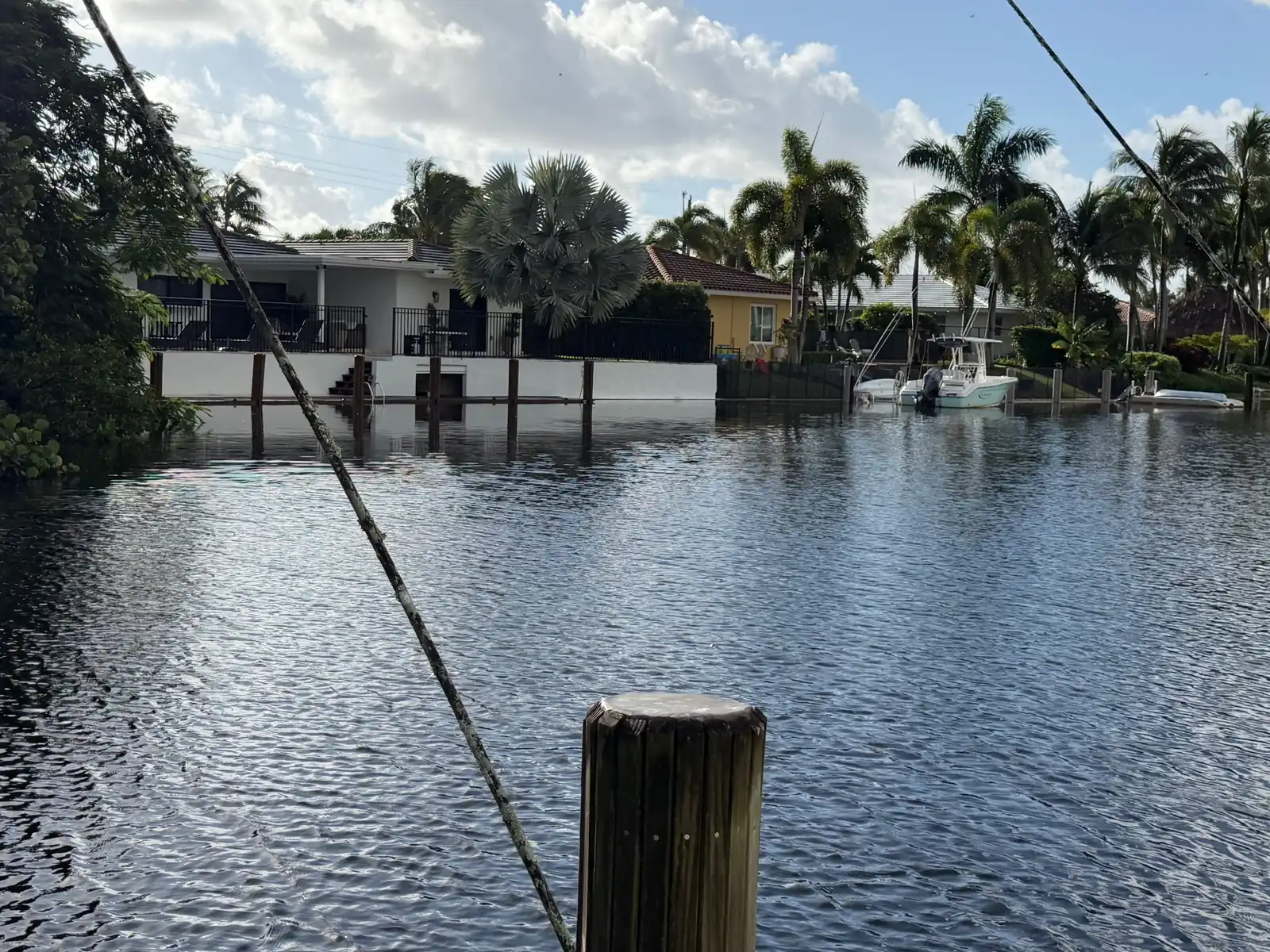
On October 25 we walked a canal during the late-October king tides and saw water sitting close to the tops of several seawalls and docks. A king tide is a good time to see how the wall, dock, and lift are performing. Here is what the data says about the tides, what the rules require, and how a cap raise is actually built.
When king tides hit in 2026
The City of Fort Lauderdale lists these 2026 king tide periods:
- September 10–13
- September 26–October 1
- October 7–13
- October 24–31
- November 5–11
- November 22–28
- December 24–25
NOAA predicts king tides on at least 40 days, more than 10% of the year. Wind, rain, and high groundwater can push water higher than predicted, so what you see at your property can differ from the tide table. The South Florida Water Management District lists October 27, 2026 as the annual maximum predicted peak for the East Coast.
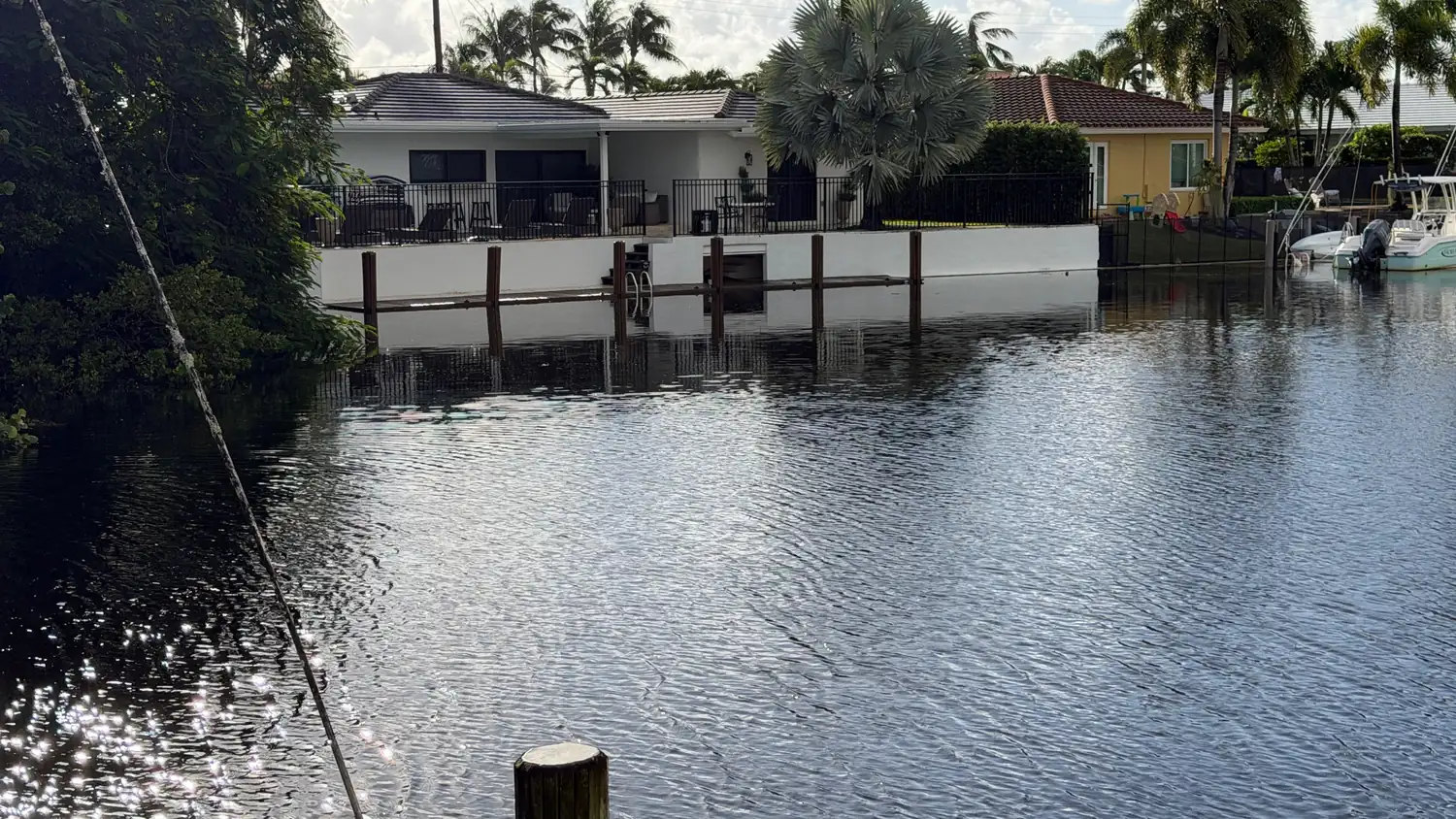
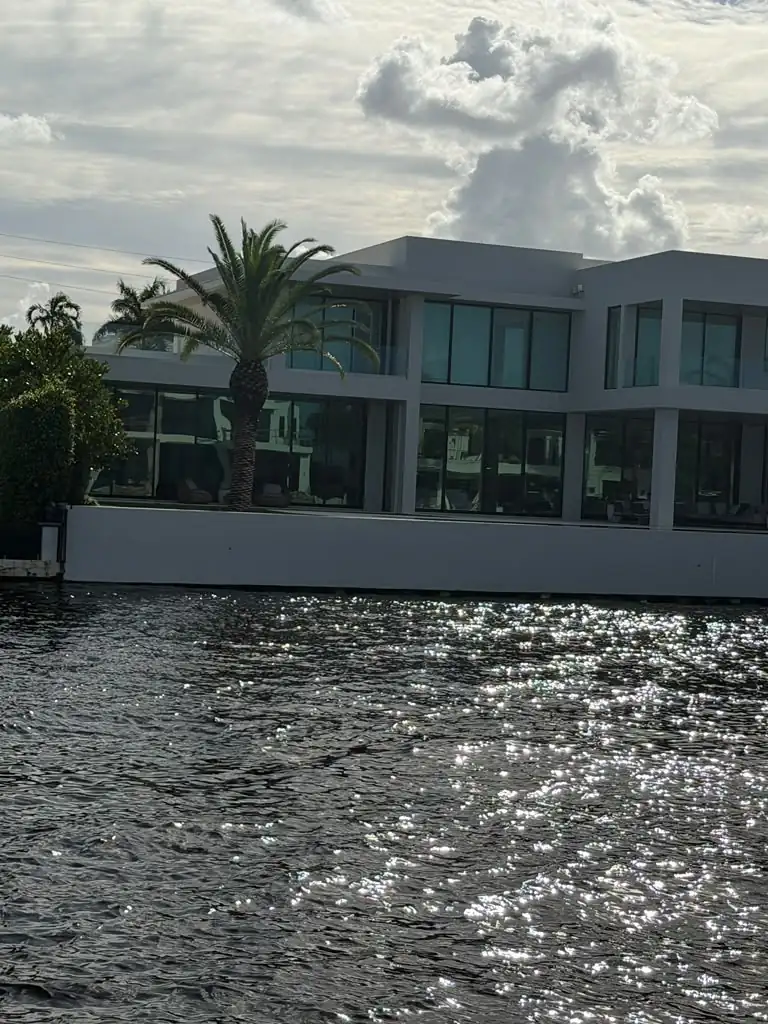
The calendar is a useful prompt, not a substitute for looking at your own wall. On our October walk, the water sat close to the top of a neighboring white seawall.
Walk your wall during a king tide
Pick a time near the predicted high tide, take your phone, and make a slow walk along the waterfront. You do not need tools; look at what the water and ground are doing.
- Cap height versus the water. Note how close the water comes to the top of the cap. A quick photo with something for scale gives you a record to compare from year to year.
- Weep holes and jet filters. As the tide drops after the peak, check whether they are draining. Soil or sand washing out with the water, or no flow at all, is worth noting.
- Cracks and joints. Look along the cap and wall face for cracks, gaps at panel joints, or spots where water seems to seep through rather than drain normally.
- Soil behind the wall. Walk the yard side. Low spots, small sinkholes, or soft ground right behind the cap can mean soil is slowly washing out through the wall.
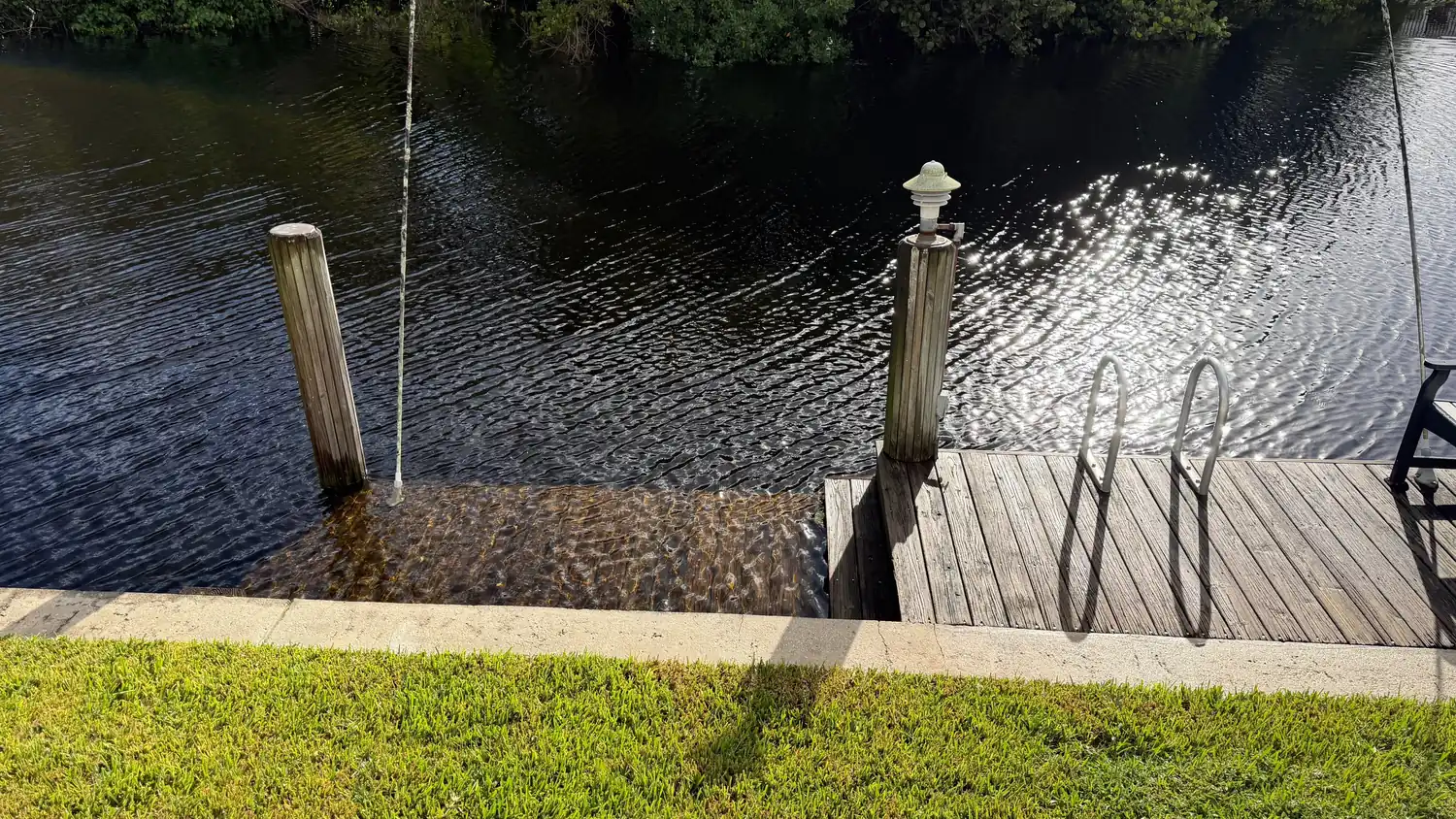
- Dock board height. See where the water sits relative to the dock boards, especially any lower sections.
- Boat lift clearance. Check the space between the boat and the lift’s top beams or canopy, and make sure cradles and bunks are still positioned correctly.
For more routine wall checks between high tides, see our seawall maintenance checklist.
Why 5 ft NAVD88 is the number in Broward
Broward County Chapter 39, Article XXV and Policy 2.21.7 set the tidal flood barrier standard for new or substantially repaired or rehabilitated seawalls, seawall caps, berms, and related barriers: a minimum elevation of 5 ft NAVD88.
Applications submitted before January 1, 2035 may be permitted at 4 ft NAVD88 if the barrier is designed and built to accommodate 5 ft by January 1, 2050. The standard accounts for sea level rise, high tides, and high-frequency storm surge through 2070. It is a barrier to tidal flooding, not seepage.
Water doesn't only come over the top
A wall can be tall enough and still let the yard flood. The usual paths:
- Through the wall. Water comes through open joints, cracked panels, failed cap sections, or holes where soil has washed out.
- Around the ends. If the wall next door is lower, water can come over that wall and flow sideways into your yard.
- Back up through drains. Fort Lauderdale recommends check valves on private drainage to keep tidal saltwater from backing up.
A raised cap works best as one continuous line at the same elevation across the whole property, with clean tie-ins at both property lines and at the dock. We can check the wall’s elevation and condition, how it ties in with neighboring walls, and whether a cap raise or a new seawall makes sense.
What the rules say
Broward County
A barrier is presumed in disrepair if it allows tidal water to flow unimpeded through or over it onto adjacent property or a right-of-way, which is a citable offense. Letting tidal water trespass onto a neighbor or street is declared a public nuisance. After a citation, the owner must show progress within 60 days and complete repairs within 365 days.
Fort Lauderdale
Fort Lauderdale updated its seawall ordinance on March 23, 2023, requiring a minimum top elevation of 5 ft for new seawalls. A raise is required when building a new seawall, when a seawall is in significant disrepair with more than 50% damaged, or when an owner has been cited for tidal flow breaching the wall and affecting a neighbor or right-of-way.
The city maintains 215 tidal valves that let rainwater drain while keeping tidal saltwater from backing up onto streets, and recommends check valves on private drainage.
Not every city uses the same number
Lighthouse Point Sec. 42-381, amended in 2023, requires all seawalls to have a cap elevation of no less than 4.0 ft NAVD. Owners may raise or cap walls to 5.0 ft NAVD, and a cap from 3 ft 8 in to 5 ft 4 in NAVD is treated as conforming. A new or substantially rehabilitated, replaced, or improved wall must be designed to accommodate a 5.0 ft NAVD cap. When a wall is higher than adjacent property, return walls must run on the owner’s property, parallel to the property line, until the elevations match. Read the local requirements on our Lighthouse Point seawall page.
How a cap raise is built
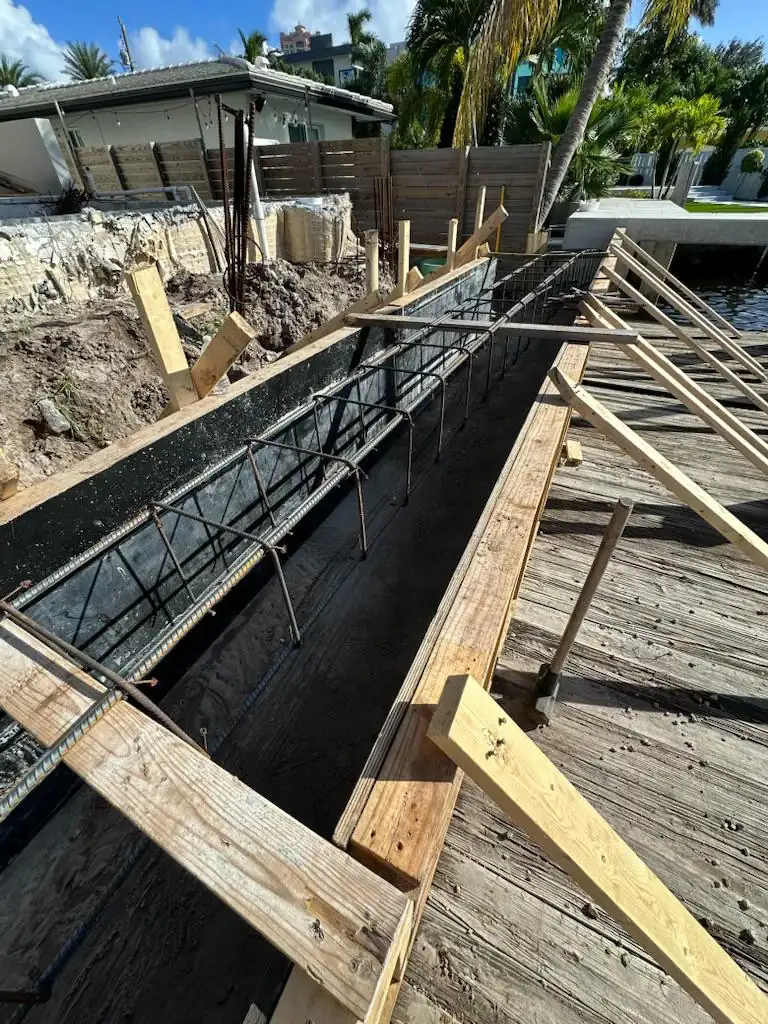
A cap raise, sometimes called a cap extension or “cap-on-cap,” adds reinforced concrete to the top of the existing wall:
- Engineering check first. A Florida-licensed engineer evaluates the panels, the existing cap, and the tiebacks to confirm the wall can carry the added weight and the higher water and soil load. When the wall can’t take it, the right answer is a new wall, not a taller cap.
- Survey and design. The target elevation is set in NAVD88, usually 5 ft, or 4 ft designed to go to 5 ft later in Broward. The design includes tie-ins to neighbors and the dock, and the drainage details.
- Permits. Plans go through the city building department and county environmental review. Required federal, state, and local approvals are part of the project review.
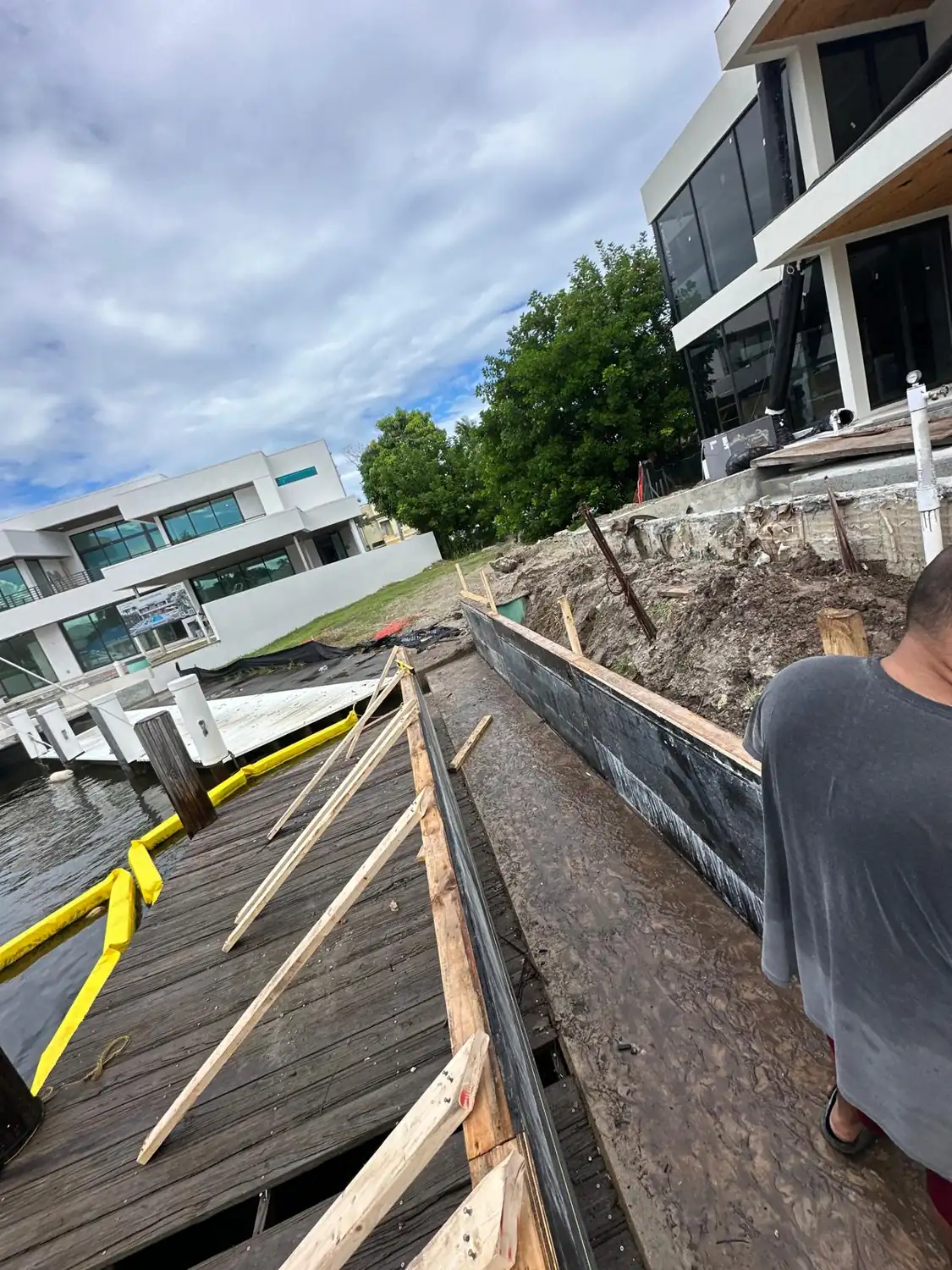
- Prep and dowels. The top of the old cap is cleaned and roughened, and steel dowels are drilled and epoxied into it so the new concrete locks to the old.
- Rebar and forms. A rebar cage is tied to the engineer’s detail and the forms are set to the new elevation. A turbidity barrier stays in the water during the work.
- Pour and cure. Marine-grade concrete is placed, consolidated, and cured, then the forms come off.
- Final elevation check. The finished cap elevation is confirmed against the permitted design.
For cap work on a particular wall, see our seawall cap repair guide. For a new wall, visit seawall construction.
If you want us to assess the wall first, see our seawall inspection service. We also serve owners through our Fort Lauderdale and Pompano Beach pages; for a project review, contact our team.
What a raised cap does
- Raises the overtopping point. More height separates the top of the wall from the water level at a high tide.
- Helps meet the applicable standard. A design can account for the required local elevation when new or substantial repair work is planned.
- Protects the yard behind it. Less saltwater over the top means less exposure for landscaping, pavers, and pool decks.
- Keeps a sound wall in service. When the existing structure can support the work, a cap raise can retain panels and tiebacks already in place.
- Plans for the next step. A cap designed at 4 ft with capacity to reach 5 ft can accommodate the county’s later target.
A raised seawall is not a substitute for flood insurance. Fort Lauderdale notes that homeowner and renter policies typically do not cover flood damage and recommends flood insurance, especially in Special Flood Hazard Areas.
Signs it's time to look at your cap
- Water reaches or comes over the cap during fall high tides.
- Your wall is lower than one or both neighbors’ walls, or water comes in at the property line.
- Water seeps through joints or cracks at high tide.
- Sinkholes or soil loss show up behind the wall.
- The cap is cracked, spalled, or separating, with rust showing.
- You are planning a dock, boat lift, or new pool deck and want everything at the final elevation.
Sources
- Broward County Resilience — Seawalls and Flood Barriers
- City of Fort Lauderdale — King Tides and High Tides
- City of Fort Lauderdale — Climate Resiliency
- South Florida Water Management District — 2026 King Tide Season Forecast
- City of Lighthouse Point — Sec. 42-381 Amendment
- NOAA National Ocean Service — What Is a King Tide?