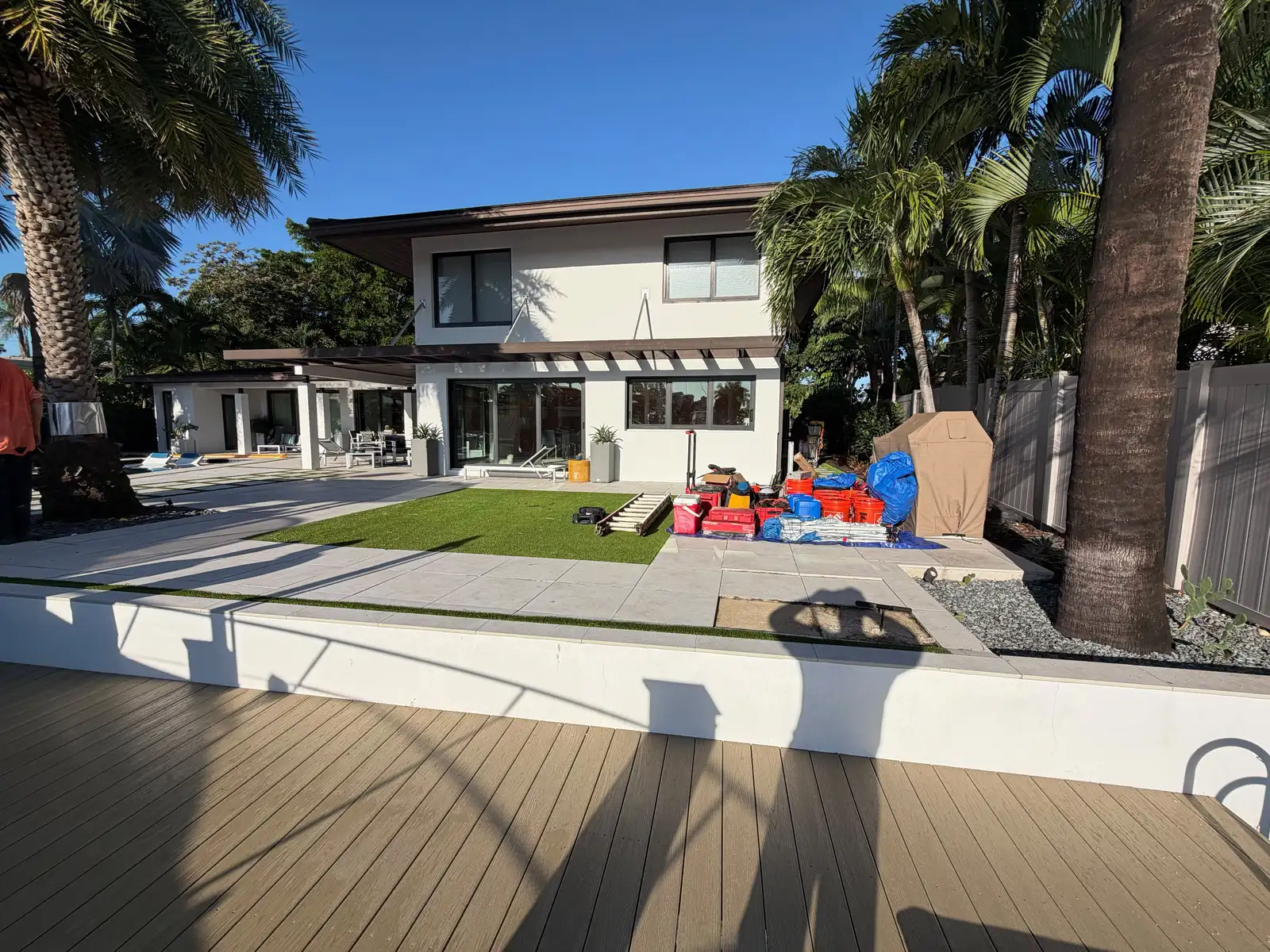
On a waterfront home in Fort Lauderdale, near Oakland Park and Bayview Drive, our crew completed four connected pieces of work: jet filters in the seawall, NCFI polyurethane injection behind the wall, a new dock, and a buried backyard drain that vents out under the dock through a check valve.
All four control where rain and groundwater go on the lot. This post covers what we did and why. If you're planning seawall repair in Fort Lauderdale, it should help you ask better questions about your own wall.
What we did on this job
- Location: Fort Lauderdale waterfront, near Oakland Park Boulevard and Bayview Drive.
- Seawall: jet filters installed through the wall face.
- Seawall: NCFI polyurethane injection behind the wall.
- Dock: a new dock built along the seawall.
- Yard: catch basin and buried PVC drain line with a check valve, venting out under the dock.
The pavers, turf and pool deck in the photos were done by others.
Hydrostatic pressure: what water behind a seawall does
A seawall holds back two things: soil and water. After a heavy South Florida rain, water soaks into the yard and collects in the backfill behind the wall. Groundwater on the land side also moves up and down with the tide in the canal.
When water builds up behind the wall faster than it can get out, it pushes on the back of the panels. That push is called hydrostatic pressure. Saturated soil also weighs more than dry soil, so the wall carries a heavier load at exactly the moment the soil is softest. Over time, that extra pressure can work on panel joints and cracks, and water that can't get out a planned way finds its own path, often carrying fine sand with it.
A seawall should not be watertight. Water needs a controlled way out, so pressure on both sides of the wall stays closer to even and the backfill stays put.
How seawall jet filters drain the backfill
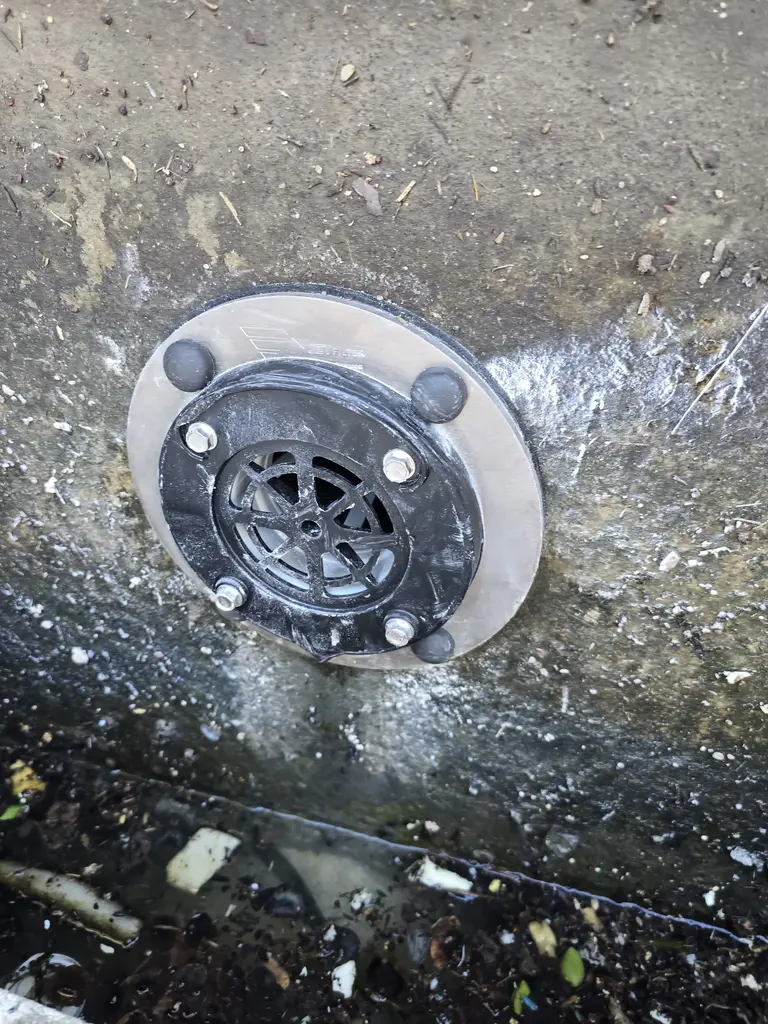
A seawall jet filter is a filtered drain set through the face of the wall. Water behind the wall can pass through it to the canal side, while the filter holds the soil back. With water able to drain, pressure behind the wall drops after rain and the backfill isn't pushed toward the joints.
On this Fort Lauderdale job, the round jet filter you see in the photo is set into the seawall face, with a slotted grate held in place by a bolted ring.
Jet filters vs. old weep holes
Many older walls were built with simple weep holes, which are open holes or pipes through the wall, sometimes with filter fabric behind them. They do the same basic job, but an open hole can clog, or let sand wash out if the fabric behind it fails. A filtered unit set into the wall is designed to keep draining while holding soil back. Whether a wall needs new drains, cleared weep holes or something else depends on how it was built and what an inspection shows. That's why a seawall inspection comes before any recommendation.
When seawall injection is the right fix
Seawall injection means pumping material into the ground behind the wall, or into joints and cracks, to fill empty spaces and seal the paths soil uses to escape. It fits best when the panels and cap are still structurally sound but there are leaks, voids or soft spots behind them. It will not fix a wall that is structurally failing.
On this wall, we did NCFI polyurethane injection behind the wall during the same visit as the jet filters. The resin fills voids and firms up the soil behind the seawall.
We did injection and drainage together because each covers a gap in the other. Sealing leaks without adding drainage can let pressure build behind the wall, and adding drains without filling voids leaves loose soil free to move. For a closer look at how polyurethane injection works on a canal wall, see our Boca Raton NCFI seawall injection project. If you're seeing sinkholes or settling in the yard, our guide to erosion behind a seawall covers the causes and repair options in more depth.
Building the new dock along the wall
With the wall work done, we built a new dock along the seawall. We did the seawall work first because a dock is tied to the wall line and sits on pilings in front of it, so it makes sense to deal with drainage, leaks and voids before new decking goes over the top. Fixing a wall later, under a finished dock, is harder.
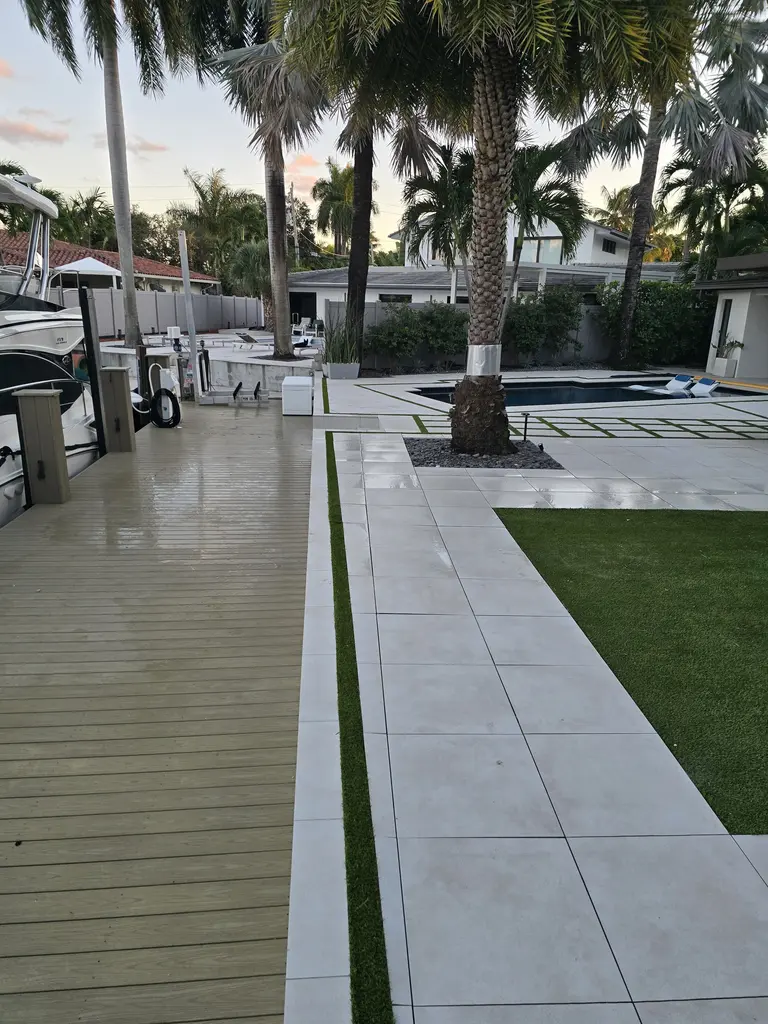
The finished dock runs the length of the seawall, with pilings along the water side and room to tie up a boat.
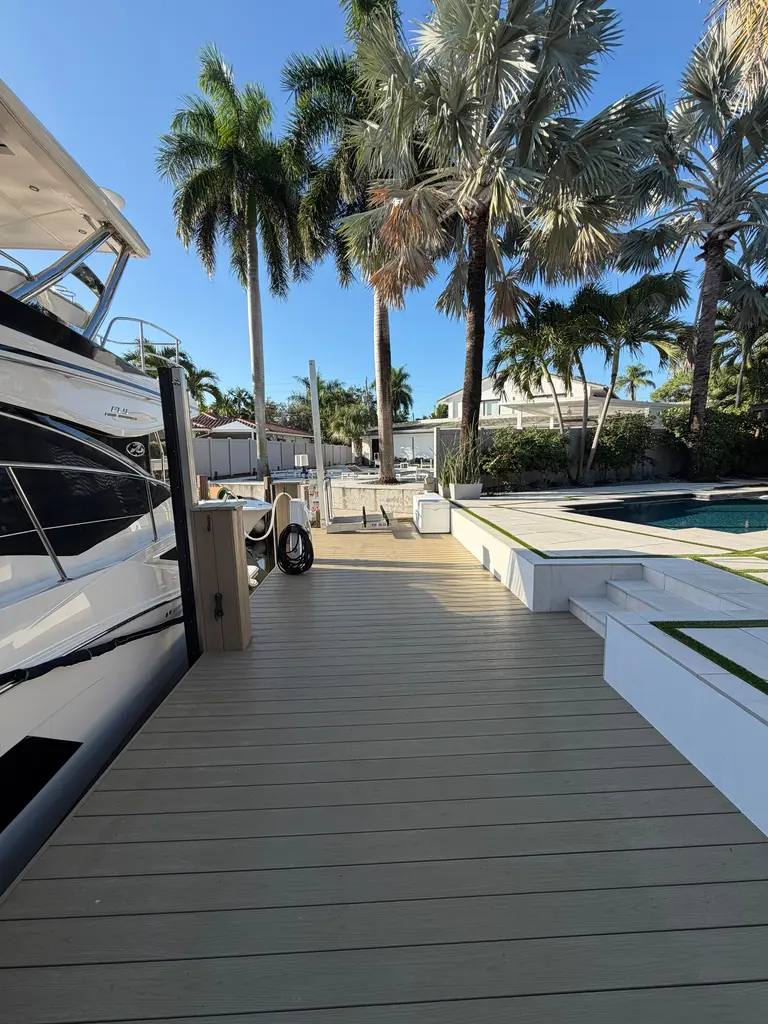
If you're comparing options for a dock builder in Fort Lauderdale, our dock construction page covers the materials and dock types we build. For aging docks, see our dock piling repair guide.
Backyard drainage with a check valve under the dock
While we were on site, we noticed water pooling in the backyard after rain. Water that stands near a seawall soaks into the backfill and adds to the pressure on the wall.
We dug a trench and ran a buried PVC drain line from a catch basin in the yard toward the water. The line vents out under the dock through a check valve. Surface water now has a clear route to the canal instead of sitting in the yard and soaking into the soil behind the wall.
Why the yard drain has a check valve
A drain that empties into a tidal canal has a problem: the water level on the other end rises and falls. A check valve lets water flow out of the pipe and closes against flow coming back in. That helps keep canal water and debris from being pushed back up the line at high water. Venting the outlet under the dock also keeps it out of sight and out of the way of the walking surface.
How the drain, jet filters, injection and dock work together
Each part handles water at a different point on the lot:
- The yard drain moves surface water off the lawn and out to the canal before it soaks into the backfill.
- The jet filters relieve the water that does get into the soil behind the wall, which lowers hydrostatic pressure.
- Injection fills gaps and seals paths so the soil stays where it belongs.
- The new dock goes in over a wall that has already been repaired.
Not every property needs all four. Some need only cleared drains. Some need injection and nothing else. Some need a new wall. The right mix comes from looking at how the wall was built, how water moves across the lot, and what's happening at the joints and the cap.
Planning seawall repair on your Fort Lauderdale waterfront
Whether you're on a canal off Bayview Drive, near Oakland Park, or on the Intracoastal, the first step is the same: understand what the wall and the yard are actually doing. Send us a few photos of your seawall, the cap and any wet or low spots in the yard, and we'll tell you what we think it needs. There is no obligation.
Learn more about the areas we serve in Fort Lauderdale, or contact us.